Abstract
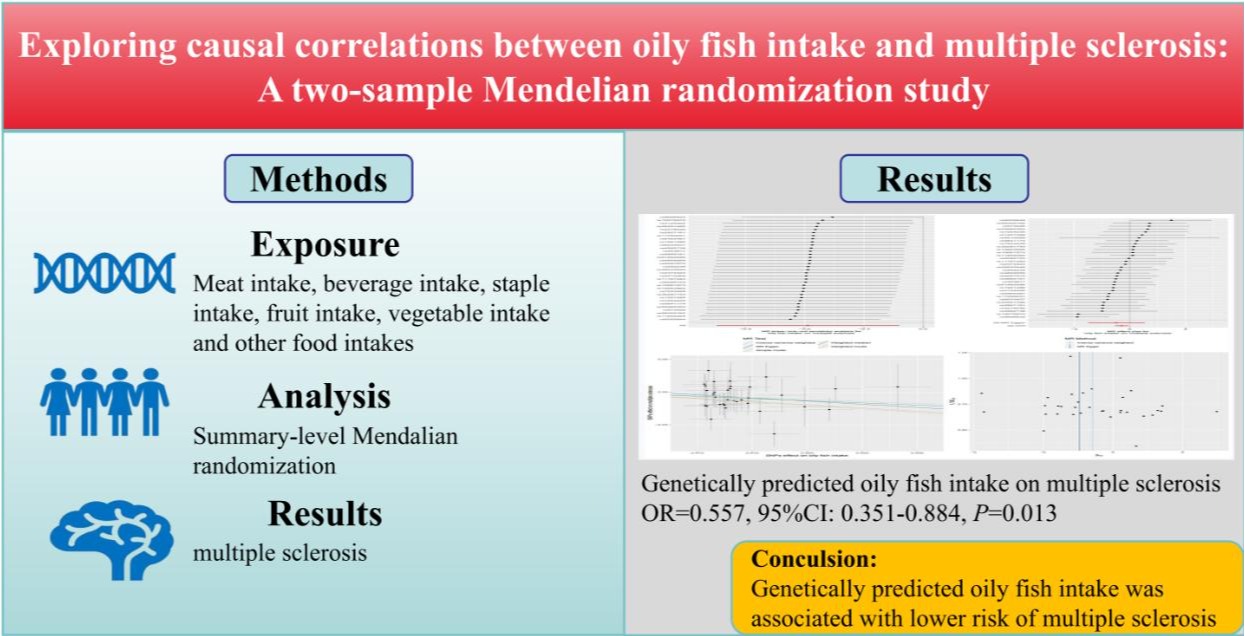
Background and Objectives: According to observational studies, dietary habits may influence the occurrence of multiple sclerosis (MS). There are, however, only a few Mendelian randomization (MR) studies on both. Methods and Study Design: The objective of this two-sample MR study was to examine possible causal associations between the twenty-one dietary practices and MS. For this investigation, we employed MR analysis utilizing generally accessible statistics from genome-wide association studies (GWAS) to examine causal connections between dietary habits and MS susceptibility among persons of European descent. The IEU Open GWAS project (https://gwas.mrcieu.ac.uk/) provided these GWAS data. Pleiotropy and heterogeneity were investigated using the MR-Egger Intercept test and Cochran's Q test, respectively. MR-Egger, weighted median, inverse variance weighted (IVW), simple mode, and weighted mode were used to assess the causal relationship between 21 dietary habit levels and MS. Results: After removing outliers, we found a significant association between genetically induced oily fish intake and MS risk (IVW, OR: 0.557; 95% CI: 0.351-0.884; p = 0.013). Extensive sensitivity analyses confirmed this result. Other dietary habits had no discernible relationship with MS risk. Conclusions: This MR analysis provides evidence of an association between dietary patterns and the risk of developing MS. Notably, higher intake of oily fish was associated with a reduced risk of MS among individuals of European ancestry.
Download this article
 PDF format
Supplementary files
Supplementary materials
n