Issue 6

Related Links
1

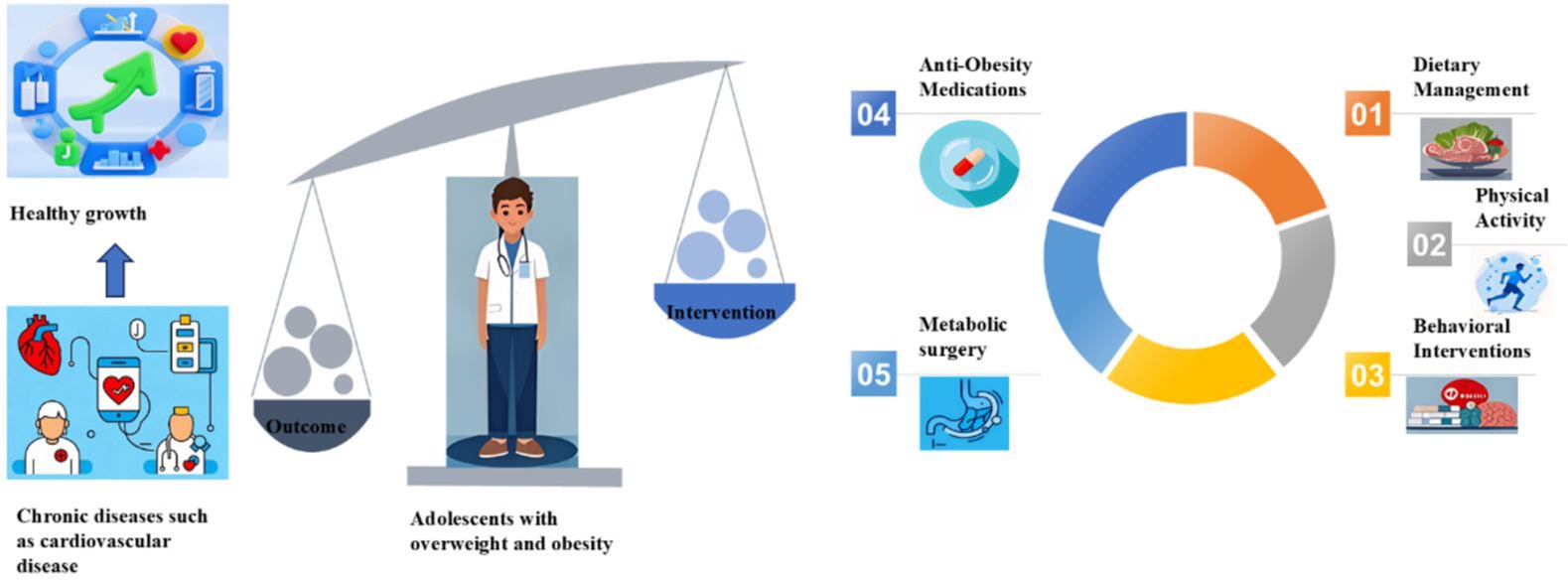
Weight management for overweight and obese adolescents: Current treatments

Author : Liru Chen, Xingyu Zhu, Chengyu Liu
Keyword : weight management, overweight, obesity, adolescent, multicomponent lifestyle intervention
Content : Background and Objectives: The prevalence of overweight or obesity in adolescents is steadily increasing in most countries around the world. Adolescent obesity increases the risk of chronic diseases such as cardiovascular disease, and is associated with negative health consequences, increasing the burden on health services. Methods and Study Design: Literature searching was conducted in PubMed and Google Scholar using the keywords “overweight”, “obesity”, “adolescent”, “weight management”, “dietary management” and “nutritional intervention” combined with Boolean operators “AND” and “OR”.
2

Review of national policies and programs targeting improvement of wasting among under-five years old children in Bangladesh

Author : Nurun Nahar Naila, Gobinda Karmakar, Md Iqbal Hossain, Aklima Alam, M Munirul Islam, Mustafa Mahfuz, Sayeeda Huq, Md Abu Bakr Siddique, Kiross Tefera Abebe, Anjuman Ara Sultana, Monzur Al Murshed Chowdhury, Deepika Sharma, Tahmeed Ahmed
Keyword : national policies, wasting, children, Bangladesh
Content : Background and Objectives: Childhood undernutrition, especially wasting, remains a significant public health challenge in Bangladesh. Wasting, or low weight-for-height, is associated with a heightened risk of mortality in children under five. Although several national policies exist, the burden of wasting persists above the global target of <5%. This review focuses on identifying gaps and opportunities within Bangladesh’s policy landscape concerning the prevention and management of wasting. Methods and Study Design: A desk review was conducted of eight key national documents, including nutrition policies, action plans, national programs, and guidelines. These were assessed for their stated goals, objectives, action plans, gaps, and recommendations regarding undernutrition, with parti...

3

Current practices and future directions of stability testing in parenteral nutrition: A scoping review

Author : Nur Aina Abu Hassan Shaari, Birinder Kaur Sadu Singh, Mohd Makmor-Bakry, Chandini Menon Premakumar
Keyword : stability tests, parenteral nutrition, parenteral nutrition solutions, all-in-one solutions, lipid emulsions
Content : Background and Objectives: Parenteral nutrition (PN) provides nutrition intravenously, often as two-in-one (TIO) or all-in-one (AIO) solutions. These solutions are complex, containing around 50 chemical components, which can affect the admixture stability. While there is substantial data on stability tests for PN solutions, the methodologies and acceptance criteria are not well-defined in current literature. This scoping review aimed to identify and summarise the current tests and methods used to assess the stability of AIO solutions in hospital settings. Methods and Study Design: Comprehensive searches on stability tests and parenteral nutrition were conducted in Web of Science (WoS), PubMed, and Scopus on 11 January 2024, updated on 4 April 2025. Searches were limited to articles pu...
4

Postprandial variability in plasma long-chain omega-3 is independent of supplement lipid structure

Author : Andrew J Sinclair, Duo Li
Keyword : long-chain omega-3 fatty acids, postprandial metabolism, inter-individual variability, triacylglycerol, supplementation
Content : Background and Objectives: Postprandial variations in plasma triacylglycerol (TAG) responses to vegetable oils are well established, but their origins remain unclear. This study examined the variability of postprandial plasma long-chain omega-3 fatty acids (LC omega-3) in response to commonly used supplements and foods and considers the biological implications of this variability. Methods and Study Design: A literature review was conducted to identify postprandial studies that reported variability in plasma LC omega-3 responses to supplementation. Studies were included if variability could be expressed as the coefficient of variation (CV) for the area under the curve (AUC).
5

Impact of low-FODMAP diet on symptom relief in irritable bowel syndrome patients

Author : Yifeng Luo, Zhijuan Xu, Rui Li, Qihua Zhang, Zhenzhen Wu
Keyword : low-FODMAP diet, symptom, relief, irritable bowel syndrome, nutrients
Content : Background and Objectives: Irritable bowel syndrome (IBS) stands as a prevalent functional gastrointestinal condition known for causing persistent abdominal pain, changes in bowel patterns, and diminished quality of life. The low fermentable oligosaccharides, disaccharides, monosaccharides, and polyols (FODMAP) diet has emerged as a potential approach to managing IBS through dietary adjustments. To explore how the low FODMAP diet affects symptom relief, nutritional well-being, and overall quality of life in IBS patients when compared to those adhering to a standard diet. Methods and Study Design: A retrospective cohort study was conducted, including patients with IBS categorized into a regular diet group and a low FODMAP diet group. Dietary intake, daily nutrient intake, IBS symptom s...
6

Effectiveness of a canteen-based dietary intervention for metabolic syndrome in occupational men: A randomized controlled trial

Author : Jianguang Ma, Yun Zhang, Bo Liu, Zhanghui Du, Xiaona Zhang
Keyword : metabolic syndrome, dietary intervention, canteen, randomized controlled trial, occupational men
Content : Background and Objectives: Dietary intervention is an important strategy for the treatment and management of metabolic syndrome (MetS). This study is aimed to investigate the effectiveness of a canteen-based dietary intervention on MetS in occupational men. Methods and Study Design: A randomized controlled study was conducted in May 2022. A total of 321 men with MetS aged 25 to 59 years were recruited from Shengli Oilfield. Participants in one canteen were randomly allocated to dietary intervention group (IG) and those in the other canteen as control group (CG). CG received health education for 6 months. IG received a 6-month healthy lunch and personalized dietary advice added health education.
7

Effects of plant-derived dietary antioxidants on Alzheimer's disease: Focus on ferroptosis

Author : Feng Gu, Jinyong Zhu, Pan Zhu, Zuquan Zou
Keyword : Alzheimer’s disease, ferroptosis, β-amyloid peptide, tau protein, plant-derived dietary antioxidants
Content : Background and Objectives: Alzheimer’s disease (AD) is the most prevalent form of dementia in older individuals. Ferroptosis, a programmed cell death characterized by iron-dependent membrane lipid peroxidation is implicated in AD pathology. Increasing evidences have shown that plant-derived dietary antioxidants exhibit their anti-ferroptosis activity. However, the anti-AD mechanism of plant-derived dietary antioxidants remains elusive. Therefore, this review aims to explore the anti-AD effects of plant-derived dietary antioxidants via ferroptosis regulation. Methods and Study Design: This review examines the available published data from all peer-reviewed original research articles on following topics: ferroptosis mechanisms, the role of ferroptosis in AD, the preclinical or clinical...
8

Dietary antioxidant index and cardiometabolic risks in normal-weight individuals: Evidence from the National Health and Nutrition Examination Survey

Author : Ting Xue, Xiuying He, Yiyang Xu, Ji Fang, Min Lin, Lihua Cai, Tian Zheng, Li Li
Keyword : antioxidant, metabolically unhealthy normal weight, nutrition, the National Health and Nutrition Examination Survey, cardiometabolic mortality
Content : Background and Objectives: Caloric restriction is the most popular dietary intervention for preventing metabolic disorders. However, its benefits are limited in normal-weight individuals. This study aimed to examine the association between composite dietary antioxidant index (CDAI) and metabolically unhealthy normal weight (MUNW), as well as the relationship between CDAI and cardiometabolic mortality among normal-weight individuals, in order to provide personalized dietary recommendations. Methods and Study Design: This study consisted of two parts: (1) a cross-sectional analysis exploring the association between CADI and MUNW; and (2) a prospective cohort analysis assessing CDAI in relation to cardiometabolic mortality.
9

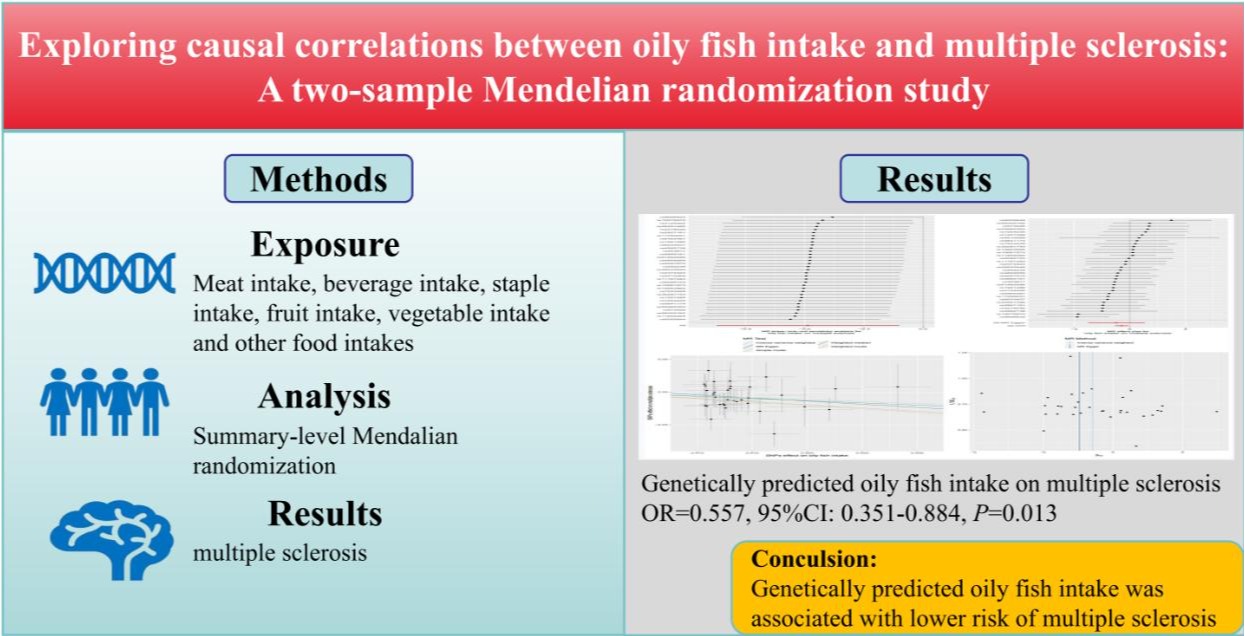
Exploring causal correlations between oily fish intake and multiple sclerosis: A two-sample Mendelian randomization study

Author : Shaodong Chang, Ke Shi, Minheng Zhang
Keyword : dietary habits, multiple sclerosis, Mendelian randomization, genome-wide association studies, inverse variance weighted
Content : Background and Objectives: According to observational studies, dietary habits may influence the occurrence of multiple sclerosis (MS). There are, however, only a few Mendelian randomization (MR) studies on both. Methods and Study Design: The objective of this two-sample MR study was to examine possible causal associations between the twenty-one dietary practices and MS. For this investigation, we employed MR analysis utilizing generally accessible statistics from genome-wide association studies (GWAS) to examine causal connections between dietary habits and MS susceptibility among persons of European descent. The IEU Open GWAS project (https://gwas.mrcieu.ac.uk/) provided these GWAS data.
10

Validity and reliability of the Malaysian Healthy Diet Online Survey (MHDOS) for assessing diet quality in Malaysian adults

Author : Fui Chee Woon, Jyh Eiin Wong, Yit Siew Chin, Rusidah Selamat, Wai Siew Teh, Ahmad Ali Zainuddin, E Siong Tee, Gilly A. Hendrie
Keyword : online survey, diet quality, validity, reliability, dietary assessment
Content : Background and Objectives: Malaysian Healthy Diet Online Survey (MHDOS) is an online survey designed to measure diet quality of Malaysian adults. This study aimed to assess the relative validity and test-retest reliability of the MHDOS. Methods and Study Design: This nationwide cross-sectional study was conducted from May to November 2022 among 218 Malaysian adults. Participants completed the MHDOS, underwent an interview-administered 24-hour diet recall (24DR), and repeated the MHDOS within two weeks. Relative validity was assessed by correlating food group servings from the MHDOS and 24DR using Spearman's correlation coefficients. Construct validity was evaluated by comparing Diet Score tertiles with food group servings, energy, and nutrient intakes from the 24DR. Linear trend analy...
11

Do dietary interventions aimed at enhancing fertility improve nutritional status in overweight or obese women?

Author : Al Foraih Meisa, Velangi Monal
Keyword : obesity, women, infertility, pregnancy, nutritional status
Content : Background and Objectives: Overweight and obesity represent critical public health challenges, impacting over one-third of the global population. This issue is particularly pressing for women of reproductive age, who are more vulnerable to weight gain. Addressing this connection is vital for promoting overall reproductive health and ensuring the well-being of future generations. This systematic review evaluates the critical relationship between preconception dietary interventions and weight loss, along with their impacts on the nutritional status and fertility of women with obesity. Methods and Study Design: Our research draws from various literature sources, including CINAHL Plus (EBSCO), Medline, PubMed, the Cochrane Library, Scopus, and the Web of Science Core Collection, covering ...
12

Association between plant dietary fiber intake and hyperuricemia risk in Chinese children aged 6-17 years

Author : Lianlong Yu, Zhaolu Liu, Lei Liu, Changqing Liu, Chao Ma, Xiaodong Zheng, Ming Zhang, Yiya Liu, Meina Tian, Xiaoyan Luo, Qianrang Zhu, Xiulan Zhao, Maoyu Wu
Keyword : hyperuricemia, dietary fiber, cereals dietary fiber, children, consumption
Content : Background and Objectives: The increasing prevalence of hyperuricemia in children is a global health concern. Plant dietary fiber may influence uric acid levels by improving gut health and lowering blood glucose and lipid levels. This study aims to examine the relationship between plant-based dietary fiber intake and hyperuricemia risk in Chinese children aged 6-17 years. Methods and Study Design: This study analyzed dietary fiber intake data from 11,423 children (aged 6-17 years) from the China Children and Lactating Women Nutrition and Health Surveillance (CCLWNHS) conducted between 2016 and 2019. Plant dietary fiber intake was assessed using a food frequency questionnaire. Logistic regression was performed, adjusting for age, sex, body mass index (BMI), smoking, alcohol consumption...
13

Applicability of different resting energy expenditure prediction equations to overweight and obese women of childbearing age with fertility problems

Author : Xuanhui Wu, Hongmei Xue, Mingyue Liang, Ying Wang, Ying Xie, Yijing Zhai, Bianling Xu, Chao Song, Xiaodong Li, Jianqiang Lai, Zengning Li
Keyword : energy expenditure, prediction equations, overweight and obese, women, fertility problems
Content : Background and Objectives: This study compared the accuracy of current energy formulas in predicting resting energy expenditure (REE) in overweight and obese women with fertility problems. Methods and Study Design: This study evaluated REE prediction formulas in 82 overweight/obese women (18-49 years) with fertility problems. REE is accurately measured using indirect calorimetry, which is considered the gold standard for evaluating energy. Anthropometric data, including height, weight, and waist circumference. Body composition analysis was performed using bioelectrical impedance analysis to determine fat-free mass and other related indicators. Statistical analyses included Spearman correlation coefficients to assess the relationship between REE and various predictors. The accuracy and...
14

Predictors of carotenoid status in New Zealand children using carotenoid reflection score: a cross-sectional study

Author : Jeanette Rapson, Elaine Rush, Rachael McLean, Kava Fuavao, Clare Wall, Helen Eyles
Keyword : reflection spectroscopy, Veggie Meter, vegetable consumption, potassium, children
Content : Background and Objectives: Optically-assessed skin carotenoid status offers an objective measure of vegetable and fruit intake. Data from the Sodium and Potassium Intake (SNaK+) study was used to explore associations of carotenoid reflection scores with body size, annual household income, vegetable and fruit intake and potassium intake, and the relationship between carotenoid reflection score and 24-h urinary potassium in children. Methods and Study Design: Seventy-five children (29 girls, 37 boys; 9 not stated) aged 8 to 13 years from five New Zealand primary schools were supported by the parents/caregivers to complete validated questions about their frequency of vegetable and fruit intake. Carotenoid reflection scores were measured using reflection spectroscopy and 24-h urine sample...
15

Study on nutritional status and incidence of sarcopenia in elderly patients with chronic heart failure

Author : Shiming Song, Hongzhen Du,Bin Luo, Xuning Lu, Zengning Li
Keyword : elderly patients, chronic heart failure, nutritional status, sarcopenia, body composition analysis
Content : Background and Objectives: Elderly patients with chronic heart failure (CHF) are at high risk of malnutrition and sarcopenia. Therefore, nutritional screening, assessment, diagnosis, and management are particularly crucial for elderly CHF patients. Our study aims to investigate the nutritional status and the incidence characteristics and influencing factors of sarcopenia in elderly CHF patients. Methods and Study Design: A total of 122 elderly CHF patients admitted to The First Hospital of Hebei Medical University from March 2023 to January 2024 were enrolled. Within 24 hours after admission, demographic data, body composition analysis, nutritional status assessments, and laboratory parameter testing were conducted for all participants. Patients were divided into sarcopenia and non-sa...
Copyright  APJCN. All rights reserved.